AGRICULTURE and technology may not seem an obvious partnership, one planted firmly in terra firma, the other written in code.
Cropping scientists have found the fit and are hoping it will help to meet global food needs well into the future.
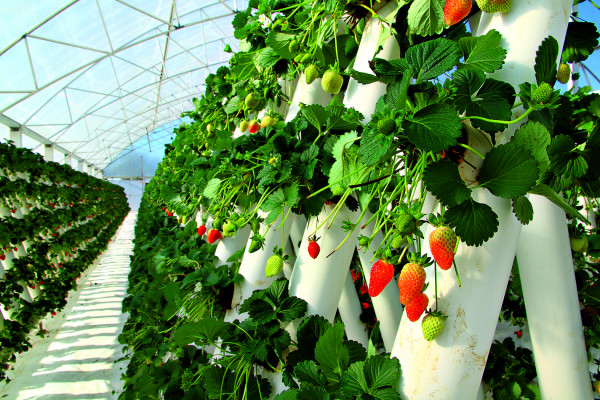
Vertical farming is not a new concept, but it is one that is constantly evolving.
In May last year we interviewed Padraic Flood from a vertical farming company based in Germany called Infarm.
Australian growers farming vertically tend to grow fresh greens, herbs, tomatoes and strawberries, it was Infarm’s success growing wheat that was encouraging.
Mr Flood’s team showed what was possible with vertical farming when it comes to cereal crops.
“The experiment showcases what’s possible not just for growers looking to move their cereal crop indoors, but for global food security in general,” he said in that interview.
“Growing these staple crops indoors, in regions previously unable to support them, could benefit millions of people.”
Professor Paul Gauthier from the University of Queensland is part of a group taking vertical farming further, addressing issues and finding solutions.
“Vertical farms grow crops indoors in stacked layers and provide consistent yield and crop quality but they use a tremendous amount of costly energy for light and air flow,” he said.
“If we create a more dynamic environment that turns lights and sensors on and off during the day in line with the cycles of photosynthesis rather than leaving them on all the time, we could tap into cheaper energy at off peak times and still maximise the advantages of vertical farming.”
Professor Gauthier said technological solutions were just one way to make vertical farming more profitable.
“We need to think long-term and take a new approach to plant science,” he said.
“What we already know about how plants grow does not entirely apply to vertical farming situations which my research has already proven.
“I managed to get strawberries to produce six kilograms per plant when everybody was saying that the maximum you could produce in a greenhouse was two kilograms.
“I multiplied the strawberry yield by three by modifying the environment and pushing them to the limit.
“We have seen that as well with wheat where controlling the environment in a certain way increases yield by speeding up production, so instead of one or two harvests a year you could have five.
“I would like to see protected cropping or controlled environment agriculture treated as a separate discipline of plant science.
“If we are to increase food production by as much as 70 percent by 2050, we need to look at things differently.
“That is what vertical farming allows us to do, we didn’t have this possibility before.”
Vertical farming is still in its infancy and Mr Flood’s research also found drawbacks with high energy costs.
He said this made farming grain indoors especially risky as these crops have lower price points than other typical indoor farmed crops when they went to market.
“Growing grains in a climate controlled setting is still in the early stages of development, but it’s a significant milestone,” he said.
“Being able to grow grain at a commercial scale could have huge benefits for
global food security.”