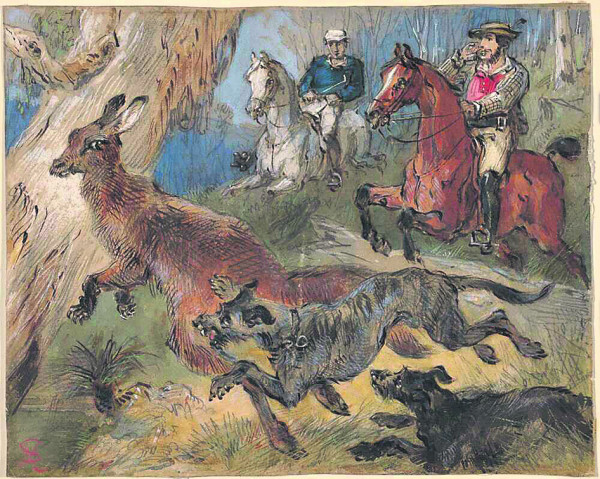
“That in the opinion of this House, the Marsupial Pest has become an evil of such magnitude, in several Districts of the Colony, as to demand the immediate and earnest attention of the Government.”
This was the wording of the resolution which was successfully moved by MP John Scott in the Queensland Parliament in 1876. It would result in the Marsupial Destruction Act and give ‘birth’ to the Marsupial Tax the following year.
In its simplest form, the tax on landowners was calculated on the number of sheep or cattle on their property. The money collected was then used to pay a bounty to licensed scalpers for every marsupial (as defined in the Act) they killed.
Originally, the Act defined the pest marsupials on which a bounty would be paid as kangaroos, wallaroos, wallabies and pademelons.
As the years progressed the amendments to the Act resulted in other ‘evil pests’ becoming eligible for bounties – these included kangaroo rats and dingoes (1885), rabbits (1887 until 1890 when a separate Act dealt with the rabbit pest), bandicoots (1892), wild dogs (1905 – the same year as kangaroos and wallaroos were excluded on the basis of the development of a new industry) and foxes (1918).
To administer the Marsupial Destruction Act, the state was divided into ‘marsupial districts’ based loosely on the already existing sheep districts. Each marsupial district was governed by a board of usually five men responsible for overseeing the collection of the tax and the payment of the bounty.
The 53 year history of the various Marsupial Destruction Acts and amendments to the Acts, was mired in problems.
When the extermination of the marsupial pest was first touted, many of the state’s landholders ran sheep and the ‘evil’ in the marsupial was that the animals ate the best grasses. The move to add dingoes into the ‘evil pest’ category was made by landowners who ran large numbers of sheep as the native dogs preyed on the flock.
But a large number of the state’s pastoralists and settlers were transitioning to cattle and the stockowners were of the belief that dingoes should be left unharmed as theirs was the lesser evil because they preyed on the marsupials gobbling up the grasslands.
Other issues arose as the marsupials began to evacuate from closely settled areas.
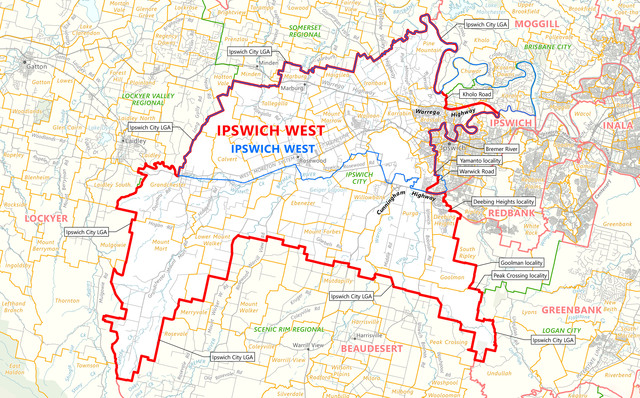
The problems which arose from this was that landowners began to agitate for their district to be excluded from the tax. A case in point followed a delegation from the Walloon Shire Council to the Minister for Agriculture.
In the September 1905 edition of the local newspaper, it was noted that where once the Fassifern and Rosewood Scrubs were … “infested with wallabies which raided the isolated patches of cultivation and were a great annoyance to the pioneer settlers … circumstances have changed [as] almost the whole of the Rosewood and Fassifern Scrubs have disappeared”.
In many of the larger districts, landowners whose properties were long distances from the centre of operations of the respective Marsupial Board, complained that they were paying a tax without gaining any benefit.
And in most districts, when the Board ran out of funds, which it often did in the latter half of the year, bounties were not paid.
In a paper written about the history of the Marsupial Destruction Acts for the Department of Environment and Heritage in 1997, Francis Hrdina calculated, based on the annual returns of the Marsupial Boards, that more than 27 million macropods and bandicoots, as well as dingoes and foxes, were destroyed during the 53 year operation of the Marsupial Tax.
In turn, he calculated the cost to Queensland was more than £1,187,000 in bonuses paid by the boards which included £349,000 in government subsidies.
Today, landowners in many of the areas where the marsupial tax was levied are now paying a ‘green tax’ to help restore what was lost.