
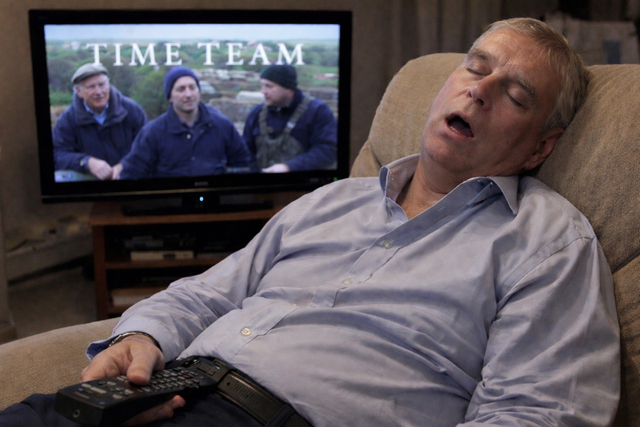
Reaching rock bottom seems different when you are royalty.
Just look at Andy, the late queen of England’s favourite son (reportedly) and a man who has courted danger as vigorously as he has skirts.
Off went his title but not his head, and he was banished from the Windsor Estate to the Sandringham Estate in Norfolk, UK.
Rock bottom for Andrew Mountbatten-Windsor was to live in a home most commoners would consider the domain of the wealthy and privileged.
Yet while Andrew’s explicit escapades have made him press fodder, he is able to lick his wounds in the comfortable surrounds of luxurious living.
There are spare heirs, and then there is Andrew, a man who has done more for the phrase ‘this meeting could have been an email’ than anyone in recorded aristocratic history.
For years he occupied that comfortable royal middle-management tier: not the monarch, not the future monarch, just sort of… monarch-adjacent.
The human equivalent of a decorative fountain in a palace courtyard.
Expensive, unnecessary, but technically historic.
Then came his friendship with Jeffrey Epstein, which aged about as well as unrefrigerated prawn cocktail.
At first, it was described as a casual association.
Unfortunately, it was the kind of ‘casual’ that kept reappearing in photographs you very much wish were casual in a different postcode.
The situation escalated from awkward headline to international legal saga when Virginia Giuffre filed a civil lawsuit in the United States.
Nothing says ‘quiet life of ribbon-cutting’ like transatlantic litigation.
It’s also hard to focus on opening a community centre when your diary also includes ‘consult barristers’.
Within days, titles began quietly evaporating.
Military affiliations … gone.
Patronages … rehomed.
And public duties were reduced to the occasional appearance so low-key it could qualify as witness protection.
In fairy tales, princes slay dragons.
In modern Britain, they sometimes create them and then go on television to explain that the dragon wasn’t really a dragon, just a misunderstanding involving travel schedules.
The torturously slow release of the Epstein files led to Andrew being arrested by the UK’s Metropolitan Police and his former Windsor home was searched in connection with that arrest.
It is understood the arrest was related to suspicion of misconduct in public office and he has not yet been charged.
He was released from custody and returned to his Norfolk mansion, poor bugger.
Imagine being a copper assigned to the case.
You just know the English police would be so polite.
“Excuse us, sir, terribly sorry, but we do need you to step into the carriage.”
Even the handcuffs would be velvet.
And he’d be like, “Do you know who I am?”
And the officer would go, “Yes, sir, that’s sort of the issue.”
But here’s the wild part: in most jobs, if you have a scandal, you get fired.
If you’re a royal you get stepped back from public duties.
That’s the fanciest way of saying, ‘go sit in the corner and think about what you’ve done’.
Regular people don’t get that option … “sorry I embezzled, boss, I’m stepping back from my Excel responsibilities’.
And the royal family’s solution to everything is the same.
‘We will handle this privately’.
If Andrew was a character in Game of Thrones, he’d be the one throwing people from the tower and frolicking with a concubine.
And when his title was lost, he’d be paraded down the cobblestoned town street naked while villagers tossed rotten food at him while shouting ‘shame! shame!
But we live in the real world where a few short centuries ago kings and princes had affairs, then executed their wives and mistresses.
A man of high status could live out all his sexual desires and it was considered normal, even when a partner was underage and partaking under duress.
Henry VIII had numerous affairs and had his wives Anne Boleyn and Catherine Howard legally executed.
He had six wives in total and they were divorced, beheaded, died, divorced, beheaded and survived.
There were many monarchs who had mistresses but did not execute their queens.
These include Charles II of England, Edward VII and George IV.
Princes who had affairs include Edward VIII and Albert Edward VII.
Because most royal marriages were political arrangements, mistresses were often tolerated.
People had shorter lifespans and it wasn’t uncommon for girls as young as 13 and 14 to be married off and start a family.
But those times are long past and there are consequences for bad behaviour.
Well, perhaps not that long past because when Andrew was cavorting with Epstein a few short decades ago.
Yes, hitting rock bottom sure feels different when you’re wealthy.