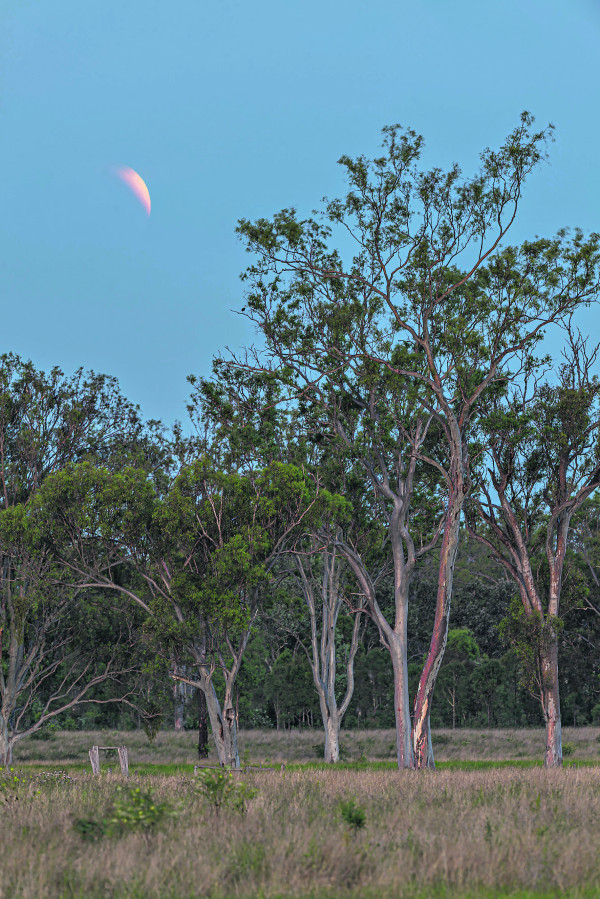
THE world’s longest moon eclipse in 581 years occurred on Friday evening.
Americans call it the full Beaver Moon. The first full moon in November was named the Beaver Moon as it was when hunters would set their traps as it was a time when beavers were most active in their preparations for Winter.
A ‘full Beaver Moon’ is what we witnessed on Friday night.
And for the first time since 1440, it coincided with a partial eclipse when the moon was almost in its apogee (its farthest point from the Earth) and was moving particularly slowly in its orbit.
In the northern Hemisphere it is also known as the Frost Moon or the Snow Moon.
Skywatchers in South East Queensland saw the eclipse begin around 6.15pm, reach its peak at 7.02pm when 97.4 percent of the moon was eclipsed. It ended three hours and 50 minutes later at 10.03pm.
The last full long moon eclipse was on February 8th, 1440.
A lunar eclipse occurs when the moon, the sun, and the earth all align, with the earth in between the moon and the sun. This leads to the shadow of the Earth, the umbra, falling on the moon. When the moon is completely in the darkest part of earth’s shadow, it is a total eclipse and is then known as a Blood Moon.
A full 100 percent eclipse is referred to as a Blood Moon and the next one will occur on November 8, 2022.
But if you missed the Beaver Moon partial eclipse on Friday night, the next one is expected to occur on February 8, 2669.