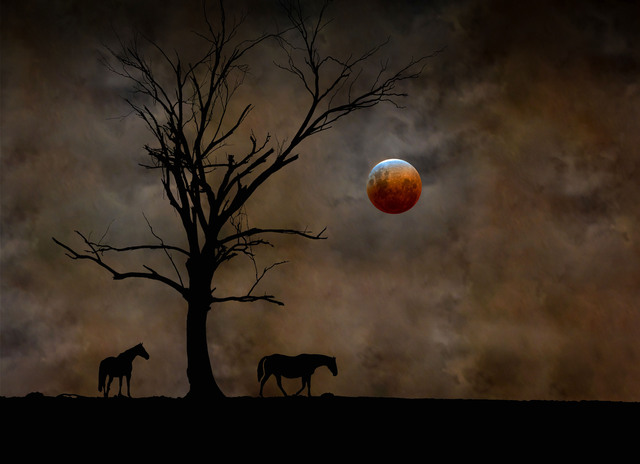


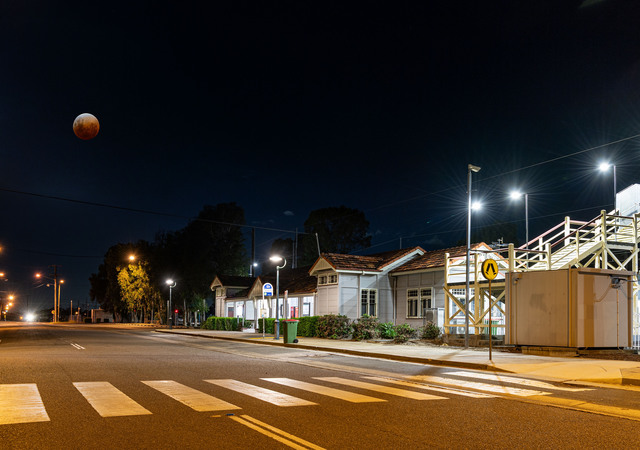
Residents had their eyes glued to the sky last Tuesday evening as a total lunar eclipse saw a blood red moon appear for 58 minutes.
University of South Queensland Professor Jonti Horner said although the occurrence was not rare, Tuesday’s night viewing was pretty spectacular.
“These things happen every year or two but it’s particularly good when conditions like this,” Professor Horner said.
“Nine o’clock is about the best possible time to have one of these happen, because it means that the moon is high in the sky and it makes prime viewing time in the evening.
Professor Horner explained the eclipse has three broad phases, two which repeat themselves.
“You get the moon starting to move into the shadow, and that’s what we call the penumbral eclipse.
“You then get the phase where the moon is properly moving into the middle of the shadow.
“Then you get the total eclipse, which is where for every location on the surface of the Moon, the Earth would be blocking the sun out of view, and so therefore the whole of the moon is in the middle of the shadow, effectively.
“Then you get the partial phase, and then you get the penumbral phase again.
As for the blood red colour many saw on Tuesday night, Professor Horner said the atmosphere bends a little bit of sunlight past the earth onto the moon when it’s in the shadow.
With the next total lunar eclipse not expected until 2029, Professor Horner said South-East Queensland residents can get ready to experience a solar eclipse in July 2029.
“It will be a partial eclipse here from our point of view in South East Queensland, but that will be a big news story,” Professor Horner said.