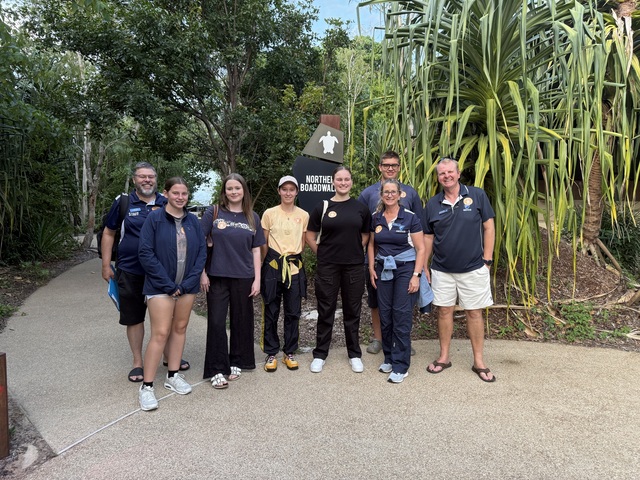
At Mon Repos Conservation Park, the beach became both classroom and theatre for students of Australian Christian College Moreton.
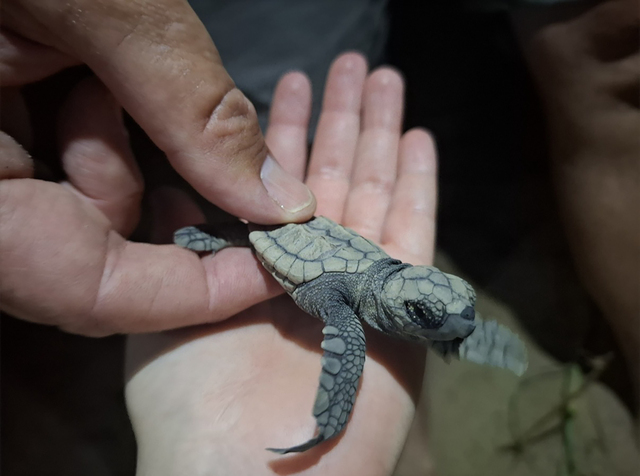
Recently, distance education families travelled from across Queensland to witness one of nature’s most arresting rituals. Guided by Queensland Parks and Wildlife rangers, students watched as loggerhead hatchlings stirred beneath the sand, broke through its surface and began their precarious journey to the sea.
They followed the tiny turtles as they scrambled instinctively toward the surf, learned of the mounting threats facing the species, and observed the scientific process that underpins its protection. Where possible, rangers led the excavation of a hatched nest, counting shells and recording survival data to better understand hatch success rates.
Co-ordinator Martin North said the scale of the hatching left a strong impression.
“I think there were approximately 100 that hatched. There were multiple nests but we focussed on one nest where the turtle had laid 109 eggs in total. Stand out reactions were being able to touch the flippers and shell and see the hatchlings up close.” he said.
“Also seeing so many making it down to the water. Some of the students watched the rest of the nest being dug up to count the eggs and saw another couple of turtles emerge unscathed.” he added.
For Louise Bocxe, DE Year Level Coordinator Prep – Year 3, the excursion offered more than a memorable spectacle.
“We chose the excursion to Mon Repos Conservation Park because it is a unique learning experience right within reasonable reach of our school and students. It allows students to see first-hand how important conservation is. There is something incredibly special about watching the turtles climb out of their nest and make their way across the sand to the ocean, you truly can’t help but smile.”
Louise explained that for the distance education students, it was also a valuable opportunity to connect in person with other students and teachers, building relationships and feeling part of a learning community while sharing this experience together.
“That sense of wonder and delight helps students connect emotionally with what they are learning and understand why protecting these animals and their habitats matters.” she said.
She said rangers combined storytelling with science, helping students grasp the mechanics behind the magic.
“The rangers carefully count the hatched eggs and record data on how many hatchlings survive. This information helps track turtle populations and improve conservation efforts.”
“They also explained that sometimes a few hatchlings need help if they become trapped or disoriented, and in those cases the rangers carefully free them so they have the best chance of reaching the ocean. This helped students see how science, data collection, and care for wildlife all work together in real conservation work.”
Vaughan Wright, Year 8 Coordinator – Distance Education, Australian Christian College Moreton, described the emotional impact of the moment.
“The uplifting part was seeing these turtles make their way down the sand with great enthusiasm.”