AUSTRALIAN fresh produce needs a rebrand so consumers understand the value in paying for food that nourishes the body say the head of a peak growers association.
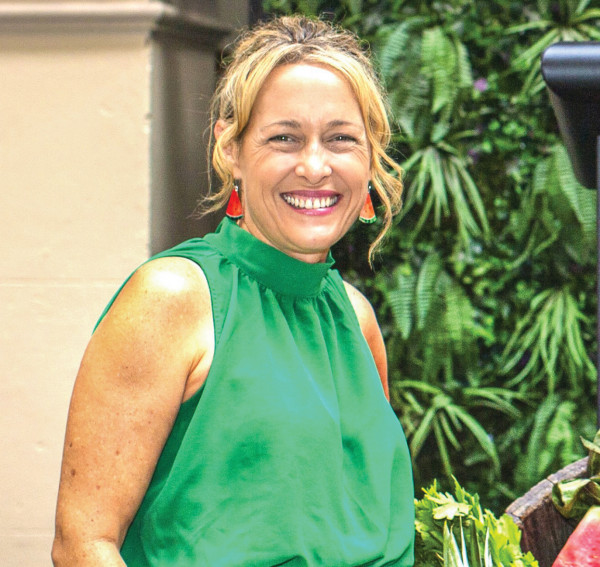
Rachel Chambers is CEO of Queensland Fruit and Vegetable Growers (QFVG).
She’s frustrated many consumers don’t see value in buying fresh fruit and vegetables.
When it comes to cost, shoppers balk at paying $5 for a two-kilogram bag of potatoes but happily pay $6 for a slab of chocolate.
“[A major news network] just did a piece on cost, what are you doing with your frozen versus your fresh veggies,” she said.
“Now, the only reason cost of living and cost of fruit and veg is foremost in consumers’ minds is because the media can’t put a photo of [a major cereal brand] cornflakes up without being sued.
“If they use a brand, it could be seen as potentially turning people off buying it.
“We are the only unbranded piece of food media can use as fodder for their cost of living campaign.
“Every time someone talks about the cost of living and the cost of food, there’s a picture of fruit or veg and we are sick of it.”
At one end there is the consumer saying food costs too much and at the other growers saying they’re not paid enough.
Trying to restore balance, QFVG introduced Geared Up Growers Negotiation Tactics Masterclasses across Queensland.
Growers taking part expressed the need for sector wide reforms around perishable produce or they wound survive, putting food security at risk.
“Where is our healthcare system coming into this, where is the value and where are the people who see value in fresh produce, in its nutrition,” she said.
“Geared Up Growers was just a start, we are negotiating what we can control.
“What it will continue to be is not having a cost of food conversation anymore but having a value.
“It’s the juxtaposition to think about what food is, we’ve got chemists selling all kinds of vitamins we can get from food.
“Those vitamins and minerals, if you actually shopped [for fresh produce] as you would a chemist, you’d see a different value to them.”
Perception is shaped through information gathering and dissemination, in the modern era, that’s through social media, advertising and marketing.
“The government uses food politically in cost of living crisis statements,” she said.
“That would be fine if it was chocolate and soda brands, but it’s not, it’s only fresh produce on every single media statement.
“This stops people from buying fresh produce in the stores and pushes our prices even further down.”
The point is if a consumer can’t see the value in fresh produce, that reflects badly for the future of growers.
‘It’s not just in the human value, horticulture is intensely workforce orientated,” she said.
“If you take horticulture out of regional Australia [towns] will cease to exist, except for mining areas.
“Even when you talk about grazing or cropping, they don’t have the intensity of workforce to hold up towns and regions.
“The value in horticulture to regional areas is huge, the value might be schools that stay open, those kinds of things.
“It’s about what is in our own sphere of influence in a wicked problem, let’s start untangling the ball.”
Rachels ‘aha’ moment came around two and a half years ago when she entered the industry.
“I was a consumer before I got into this organisation,” she said.
“My first event was a couple of weeks in, I sat in an auditorium and listened to a professor talk about buying habits.
“They said, ‘so $5 for a punnet of berries, that’s expensive isn’t it?’
“I thought, yes, it is expensive, then he said here are the nutrients in berries and this is what it does.
“They also have a colour you can’t get anywhere else, now hands up, who bought a cup of coffee today and who buys coffee every day of the week and pays over $5 for it?
“I was sitting there thinking ‘that’s me’.
“Then he said, so is your family worth a cup of coffee you spend on yourself is your family worth a punnet of blueberries every day.”
She realised as a consumer the value of a cup of coffee and fresh produce were not on an even keel.
“We haven’t got that right with fresh produce just yet, we see it as mundane, we see it as boring, we see it as every day and now we are starting to see it as expensive,” she said.
The disconnect between consumer and fresh produce has become so wide conditions like scurvy are making a comeback.
Scurvy results from a vitamin C deficiency and causes loss of teeth, ulceration of the gums and spontaneous bleeding among other horrendous symptoms.
“I thought scurvy was only something I learned about in primary school but a regional school in Queensland had a case last year,” she said.
“And to make it worse the region was a citrus growing region.
“We made inquiries and asked ‘how does this happen?’
“We found citrus was being sent to Brisbane and divvied up there because it was too expensive to be shipped around the local areas.
“Farmers pay for that transport and it was too expensive.
“We are looking at how to get [citrus] into schools and asking why, in this day and age, someone has scurvy.”
Fifty years ago essentials in a typical household budget would have been housing, food, water, electricity, schooling and transport.
Today’s budgets often include things like subscriptions for entertainment channels, mobile phones and internet packages.
“If Netflix has a multi billion dollar budget for its subscriptions, where’s the PR for food,” she said.
“We are going to start going into our next narrative, Geared Up Horticulture.
“We’ll ask what else can we start unravelling in that great big ball and whose job it is to do so.”