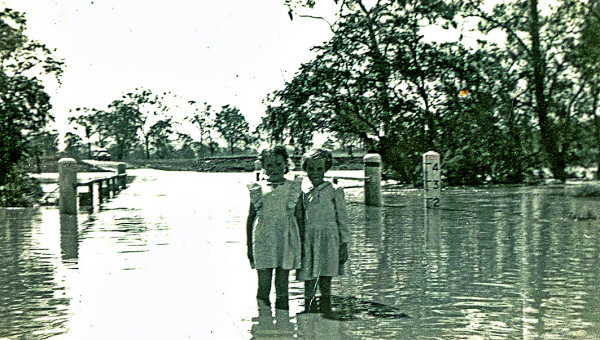
AGITATION for a high level bridge over the Seven Mile Creek on what was then known as the Toowoomba Road was first reported in the local newspapers more than 140 years ago.
As time passed, the bridge, which was built in the late 1850s and replaced in 1900 and again in 1968, would become the target of a boundary dispute and would later be referred to as a ‘blockade to progress’.
The Seven Mile Bridge in all its iterations is an unremarkable structure. A simple beam bridge it could not boast arches, trusses, cable stays, cantilevers or even multiple spans – as bridges go, it was and is, truly unremarkable.
Yet the Seven Mile Creek bridges that have allowed pedestrians, horses and vehicles to pass over them unhindered, except during floods, do have quite a history.
The first bridge only appeared in newspaper columns between 1861 and 1886 as a geographical reference point along the road and in a couple of instances as a shelter … “he was found sleeping under the bridge”.
The record breaking flood in the summer of 1887 marked the first calls for repairs to the structure and its approaches. These were quickly followed by calls for a flood proof (our words) high level bridge to replace the “decaying” structure.
In 1893, when the flood height records were broken again, the Rosewood Road Board contributed £5 to repairs and the Mutdapilly Road Board stumped up more than £11.
These costs were referred to in 1897, when the Chairman of the Mutdapilly Board berated the Rosewood Board through ‘letters to the editor’ for failing to agree to meet them halfway in funding a new bridge.
“It is a fact that, after my Board found it impossible to repair the old bridge, they contemplated erecting a low level bridge on the downstream side of the old one and made an earnest appeal to the Rosewood Board for assistance,” he wrote.
The Mutdapilly Board’s answer to Rosewood’s refusal to support the construction of a new bridge on a road used frequently by Rosewood residents, was to close the bridge to traffic.
The result was that Rosewood residents petitioned their Board to help fund the new bridge. They were angry and blamed their Board.
But the Boards were unable to find any compromise, the genteel slanging matches through the newspapers continued and the bridge on the main road between Rosewood and Ipswich remained closed to traffic for three years.
The contretemps was resolved in 1900, when the government granted funds to both Boards to build the new bridge.
This resolved the problem only to a degree as the new structure was just as prone to flooding as the one it replaced.
And before long the miners and their union, the Ipswich Chamber of Commerce and all manner of folk joined the chorus.
• Continues Next Week