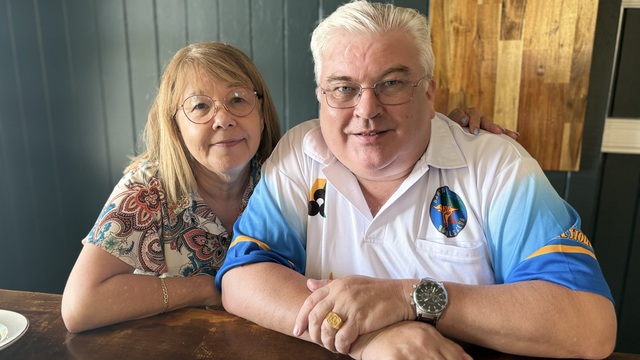
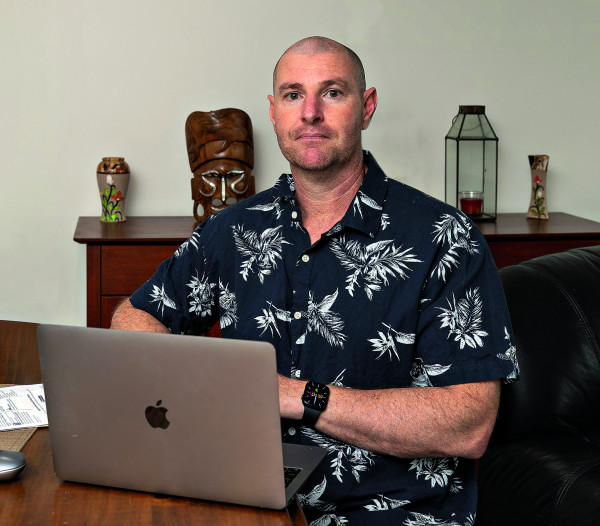
A ROSEWOOD man says a permanent government digital ID system cannot be trusted.
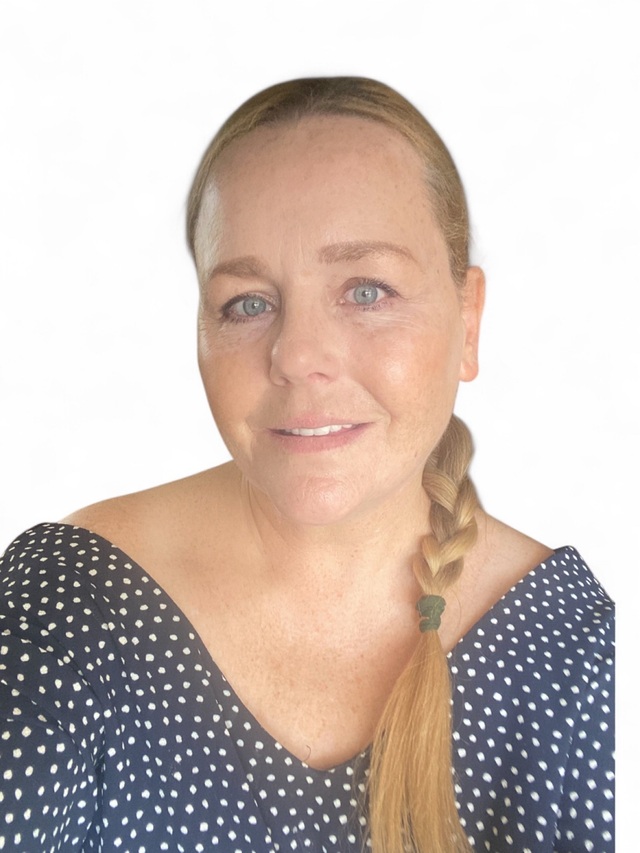
Ex-serviceman and police officer Sam Tate feared people without digital literacy skills could be locked out of society or that groups the government deemed undesirable might have personal information weaponised against them.
“We need to raise awareness of what a digital ID really means for us,” Mr Tate said.
“I worry it could lead to the misuse of our privacy.
“Security concerns and the implications for civil liberties are a big worry; and although we have been told the scheme is voluntary, for how long will this be?”
The system will bunch together a person’s driver’s licence, Medicare card, passport details, Centrelink details and other credentials.
Organisations like the New South Wales Council for Civil Liberties, Digital Rights Watch, and Family Voice Australia declared strong resistance to the Bill, citing insufficient protections for sensitive data and the danger of “function creep”.
The Bill’s critics have said the provision to mandate a digital ID for certain services under the imprecise condition of being “appropriate to do so” left much to be desired in terms of checks and balances.
Queensland LNP Senator Paul Scarr voted against the Bill.
He said he was worried about the “inadequacy of privacy safeguards”.
“I am also very concerned that a situation will develop where people will be denied services, be they government or non-government services, unless they use the Digital ID,” Senator Scarr said.
“It is very important to note that this may develop as a matter of practice.
“If government and non-government systems make it very difficult to use traditional forms of ID (paper-based), then it will not be truly ‘voluntary’ to use the Digital ID; it will be Hobson’s choice.
“As a matter of practice, people could be denied services even if the Government says it is voluntary.
“That risk has not been adequately addressed.
“Systems like this gather a momentum of their own and while politicians come and go, these types of schemes can expand over time and get used for purposes that were never intended; that is the danger.”
Member for Blair Shayne Neumann said he would vote for the Digital ID when it is goes to the vote in the House of Representatives at the end of May.
He said he believed there were sufficient safeguards against the misuse of personal and biometric data.
“Digital ID does not allow for discrimination, nor surveillance,” Mr Neumann said.
“Australia’s Digital ID system has strict privacy safeguards, so it can’t be used to track your online activity or the services you’re accessing.
“People will still be able to access government services the way they do now over the phone or in person at government shopfronts.
“Digital ID is simply an alternative, safer way to verify your personal details online, and is not a new identity card or number.
“It can’t be used as a social credit system.
“It does not track, surveil, or rate people or their online activities.
“Such claims are misleading and built on misinformation.”