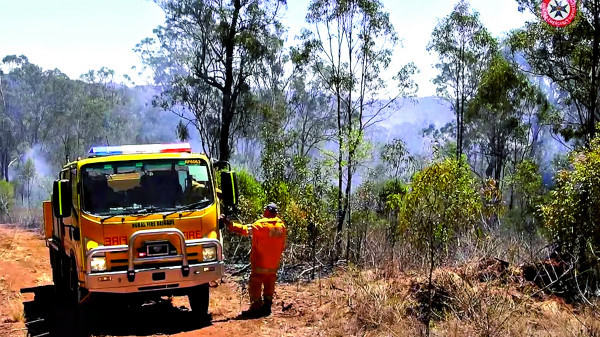
RURAL fireys want homeowners to tackle the heavy fuel loads that have swollen after the humid weather and heavy rains over previous months.
Queensland Fire and Emergency Services (QFES) incident controller Paul Storrs said larger volumes of grass and scrubland have built up and now need managing.
“There is a lot more vegetation growing right now and that is a key factor that we need to be prepared for this winter,” Mr Storrs said.
“We are asking people to make sure they get out there and do whatever mitigation is possible.
“That could be putting the cattle out in the paddock, getting the slashing done and doing what is needed around farms and homes to prepare for and manage their pasture.”
He said it was important to clean out gutters and keep the grass mowed well down around properties.
Mr Storrs said stored woodpiles or fuel sources close to buildings should be moved away and rural properties must ensure easy access and water supply to firefighters.
“Rural dwellers should take the time to check their pumps and their water sources and ensure they’ve got fittings on their tanks that firefighters could access when needed,” he said.
“It’s always an issue when you try to turn up to an area and we can’t get a fire truck in the driveway due to overgrown vegetation.
“Because houses are now built on bushland, we must prepare for fires that were never an issue before as they would burn their way through without damaging property.”
He said it was also essential to have a Bushfire Survival Plan in place when living in rural areas.
“Bushfires in Australia go through cycles; I am not going to weigh in on the climate change conversation but when you look out of the window you can see our landscape is changing and we need to be ready for more intense fires.”
Meanwhile, the long-range weather forecast for March to May rainfall is predicted to be below median for the region, while March to May maximum and minimum temperatures will be above the median value for almost all of Australia.