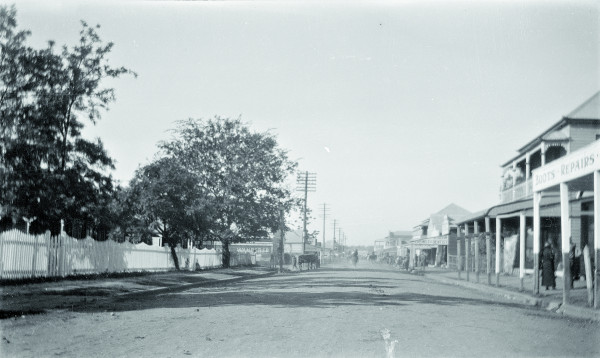
THE plaintive cries of a young child alarmed the farmer in his field outside Rosewood.
There were no children at home and he’d never known his neighbour’s children to stray this far.
He followed the cries and found a bedraggled toddler with a cattle dog close by. They were wandering around in his field of sorghum.
A call out to his nearest neighbour and then to other neighbours was unsuccessful – no one was missing a little boy.
He picked up the lad and he and his wife took him into the police station at Rosewood. Sgt Hacker immediately called the Marburg and Ipswich police stations and found that there was a large search underway at Marburg for a 2½ year old boy.
Apparently, the child had been chasing calves on his parents farm and had wandered into the bush while his parents were busy.
“As very high grass, lantana and bushes grew in the rough country beside the Marburg farm, the child must have had a very trying time,” reported a Marburg correspondent.
“The child suffered no harm other than a few scratches.”
The year was 1947, the month was May, and Sgt Hal Wacker had been on the job as Officer in Charge at the Rosewood Police Station since November.
Finding the parents of the lost child was an easy job and a happy outcome for the police sergeant in his new country policing role.
But by then he had already realised that policing in a country town sometimes meant he had to be all things to all people.
In his first weeks he decided to ‘clean up’ the complaints about youths fighting, drinking liquor, using bad language and general ‘tomfoolery’ to upset the organisers of the dances at the Grandchester Hall.
A raid in November and again in December soon sorted out the worst offenders and ended in a court appearance for a number of them – much to the chagrin of some of their parents.
Leading the Anzac Day March in Rosewood on an invitation of the organising committee was an invite he gladly took up and his blurry image on horseback at the head of the parade was captured in a photograph now held by the Queensland Police Museum.
Less than two months later, he was leading a party through rough terrain on Mt Beau Brummel to recover the body of a teenager who had fallen down a precipice while on a climbing outing with four of his friends.
About six months later, he faced another tragedy.
Two men were working together at a coal face at the Rosewood Colliery, when ‘a slip in the roof’ sent a rock down on top of one of them and knocked the other about.
The rock, estimated to weigh about a tonne in today’s measures, eventually extinguished the life of the miner whose body was trapped under it and fractured the thigh of the other.
Sgt Wacker accompanied the mines inspector into the pit and reported to the coroner on the scene of the accident and the injuries sustained by the two workers.
There were also many times when Sgt Wacker enjoyed his role as a country policeman.
It was evident that he had won the respect of the locals as when he announced that he had been offered a transfer to Toowoomba on a promotion, the town leaders arranged a farewell party where he was praised for his work and fair dealings with the populace.
The Wacker family left Rosewood in October 1947 and moved to Toowoomba.
Less than a year later, in August 1948, a small article appeared in the Queensland Times announcing the death of Sgt Wacker from natural causes. At the time, he was the Officer in Charge of the Bulimba Station.
On Friday, August 20, 1948, fifty-six police officers formed a guard of honour at his funeral in Brisbane.
Sgt Harold Wacker was 47-years-old.