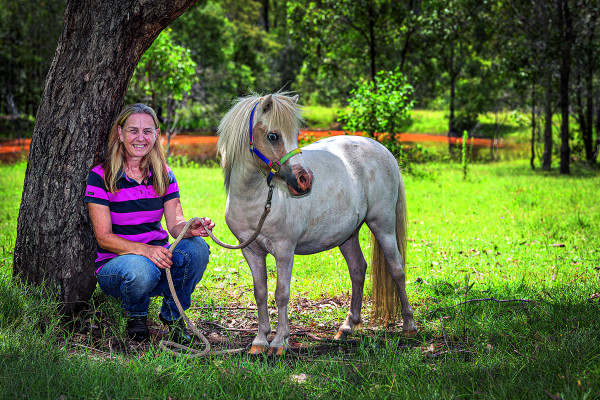
HAIGSLEA mental health counsellor Karen Whitfield is a ‘horse whisperer’ of sorts because she uses the power of these mighty beasts to help clients regain confidence and heal emotional traumas.
Perhaps she is better described as a ‘horse listener’, not that her listening abilities begin and end with horses, as a mental health counsellor understanding humans is the core of her business.
Equine Assisted Psychotherapy is a technique that has grown in popularity over the years and one Karen enthusiastically practices.
As suggested in the title, horses are used during counselling sessions.
“A lot of clients feel more comfortable and slightly less intimidated than if they were sitting and talking face to face in an office,” she explained of the sessions.
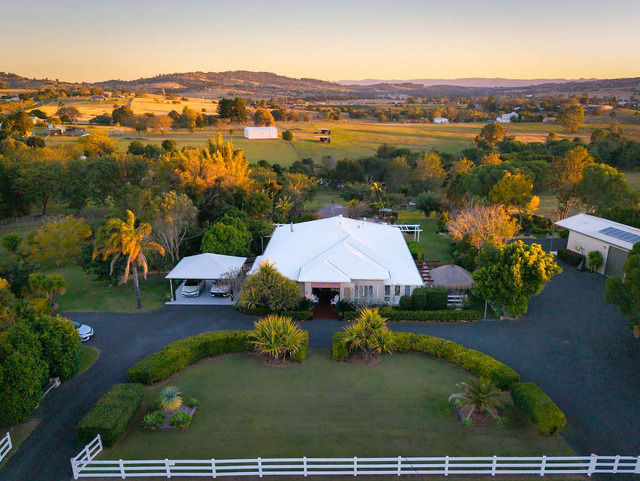
The business operates from a property that is home to around eight horses, each of which is selected for their suitability as therapy animals.
“My partner is a horse trainer so we move [the horses] around to give them a break and also to match them up with the experience best for the client,” she explained.
“We have a range of horses, from a mini pony to ponies, horses and a big Shire we can incorporate into the counselling sessions.
“The Issues helped are mental health focused like anxiety and depression.
“I also work with people dealing with fairly complex histories of trauma and children who are autistic and want to work on different things like confidence and making new friends.”
The horses aren’t ridden, they are there to help with emotional regulation and to build a partnership of trust.
“Being around horses brings a nonjudgmental space so people feel less vulnerable and able to work on a range of issues,” Karen said.
“We can’t really explain exactly why horses work, it’s the results that are consistent and incorporating them in therapy sessions brings about really good outcomes the majority of the time.
“The process itself is quite slow and we expect people to come for quite a few sessions before they feel comfortable.
“We take our time and work in the present because that is how horses live … they live from moment to moment and in the present.
“This is also where the emotional regulation comes in, it’s about how you’re feeling and how you deal with that looking at the horses regulate, there is a lot of mirroring going on.”
A session typically starts with finding out what a client wants to achieve and at this point, horses are observed from a distance.
“We look at safety because that’s important to make sure the client feels safe, then we move into interacting with the horses and that might be a one on one or with a couple of horses, it depends on what the client feels most comfortable with,” Karen said.
“I have a client at the moment who has two artificial limbs from the knees down and needs a very safe environment because she’s less stable, so that is something we take into consideration.
“We do different activities, one is building obstacle courses and those obstacles can represent barriers in life they need to overcome, a lot of metaphors are used during therapy.”