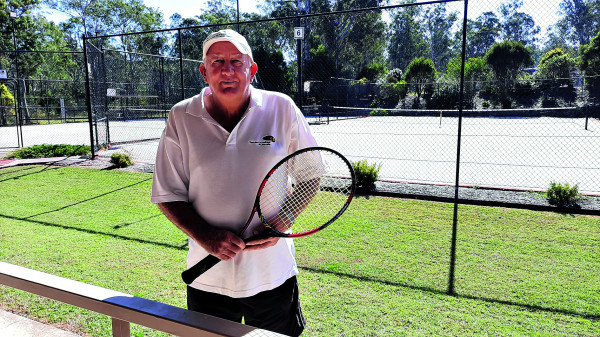
WALLOON coach Stuart Ware has seen the rise and decline of regional tennis over the past five decades.
The Tennis Coaches Australia Advanced Coach recalls the late 1970s when 400 teams were involved in Ipswich district fixtures.
During that decade and into the 1980s, he said Ipswich “had the best array of tennis centres in Queensland”.
That included the junior association “hub” previously in Joyce Street, the Denman’s Tennis Centre at Brassall, Sportsway (Bundamba) and Ipswich Grammar School.
“Tennis at that time, never had a lot of opposition,” he said.
Now, no Saturday competition covering the Ipswich area is staged outside of about 20 junior teams at the Chermside Road courts, East Ipswich.
“The fixture side of things pretty much died a couple of years ago,” Ware said.
Ware’s honest assessment is that people want weekends to themselves rather than spending four or five hours playing tennis on a Saturday.
The dramatic rise in a multitude of other options has also had a telling impact.
Ware said another issue was kids electing to play tournaments before they are ready.
“They haven’t played enough tennis to get match tough and tactically aware,” he said. “They need to play against adults.
“There needs to be a strong local competition in every place.”
While saddened by developments in his sport, Ware is not ready to give up the good tennis fight yet.
The highly-regarded coach continues to help many juniors at his Tall Gums Sports Centre and has served students at 24 schools around the district.
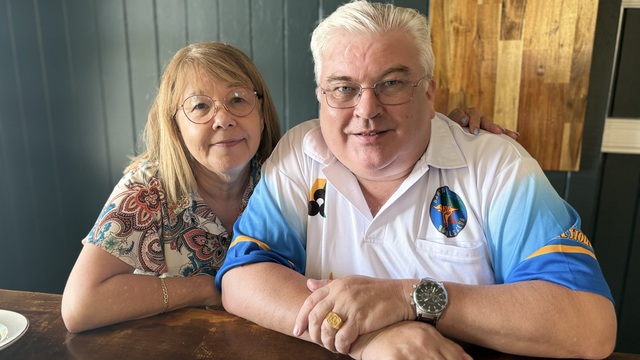
Having established the Tall Gums centre at Walloon with his wife Kay, Stuart knows the importance of country people in sport.
“Our focus has always been the country areas,” he said.
“We never ever try to compete with Ipswich.”
Stuart has strong family links to Haigslea and Thagoona. Kay’s family connections extend to the Walloon Newsagent and Walloon Saloon.
Together, the tennis enthusiasts purchased the current Tall Gums land in 1985, before commencing tennis operations in 1987.
They have set up two grass and four clay courts on their 32 acre property.
While coaching remains the Ware family’s bread-and-butter priority, they are trying to restore regular fixtures.
They hope recent Thursday social match-play can be expanded with more support from regional schools.
“The goal is to build enough tennis players in each high school, and primary school if we can, to generate a competition,” he said.
Having coached many promising players since 1980, Stuart shared what provides the greatest satisfaction.
“The thing I always find most important is to take somebody from just a beginner to the best they can be,” he said.
“I actually get more out of that than working with the better kids.”
That’s why his main goal is to raise the profile and appeal of tennis.
“It is social,” he said, urging more people to give the game a go.
“We’ve had quite a few people come through here playing tennis and got married.
“It is a good way of meeting people.
“It’s the exercise outside and play for all ages.
“We have kids here who say they played with granddad at the weekend, or I played with mum and dad. That sort of thing is still there … that’s a positive.”
Having country support goes a long way in helping strengthen the traditional sport.
“Country kids are definitely better skilled,” Stuart said.
Whether it’s due to their farm life or country demands, Stuart knows one thing during changing times where fundamental motor skills are often disappearing.
“They can problem solve.”