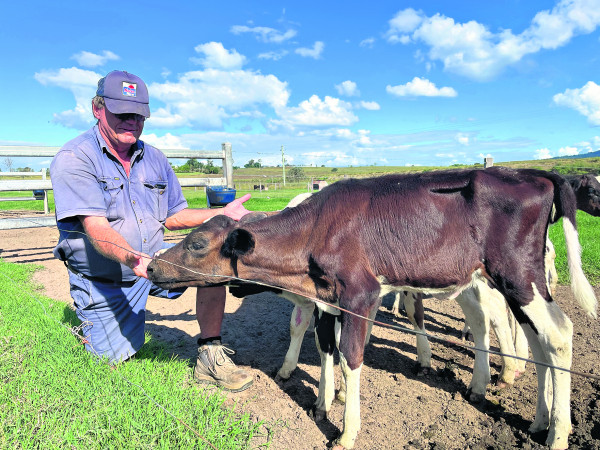
LOWER Mount Walker dairy farmer Ross Blanch was “run off his feet” taking care of his farm, his livestock and supporting fellow farmers through the Farmer to Farmer Crisis Support Line during the recent flood.
Ross said he was glad to see the sun come out after the long days of wet weather.
“Rain is always welcome on the farm, to give life to the produce that we have planted in the paddocks and to fill up the dams,” he said.
“Work is always busy because there is always something to do, but when you experience flood or any other type of event out of the norm things get a little busier.
“After five full days of heavy rain, it just became too much and our cows, particularly the younger livestock, started to feel the effects of the wet, the wind and the cold conditions.”
He didn’t lose livestock through flood inundation. However, the weather conditions caused the loss of eight calves.
“It was upsetting. It’s something that every farmer dreads, you never want to see loss of life on the farm or animals that may be suffering,” he said.
And while Ross was dealing with the loss of his livestock, his phone did not stop during the disaster with farmers and agencies calling looking for help, assistance and support.
“My Lifeline work also became a priority, farmers were calling distressed, upset and shocked as to what was going on around them,” he said.
“Phone calls from Queensland, New South Wales, Drought Angels, Norco and even neighbours and local farmers were coming in.
“Everyone was looking for something or someone who could help.
“Local farmers who have paddocks beside creeks and rivers were concerned about their livestock washing away and about animals in distress with nowhere to go.
“In hearing their stories, I realised my loss was nothing compared to some, who had no other option than just to stand there and watch their whole life just wash away.
“Machinery, livestock, produce – their livelihood – just gone in an instant.
“I really felt for these people and their families, their situation really put life into perspective.”
During that period Ross estimates he received and made over 150 calls which were all focused around mental health, loss of life and livelihood and then stress around the ongoing loss once the flooding was all over.
“You just have to keep on going and Lifeline work inspires me to do so,” he said.