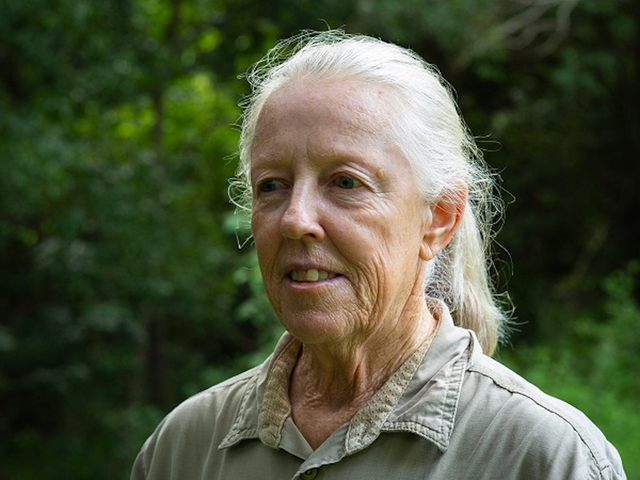
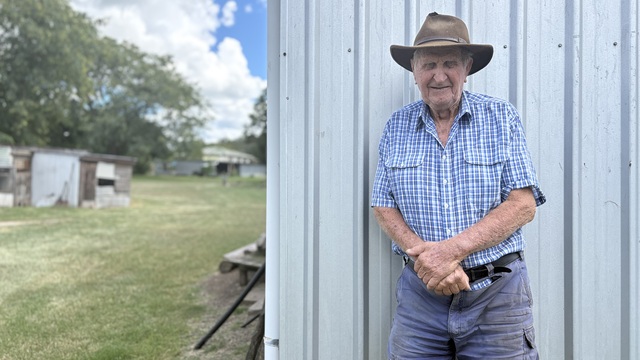
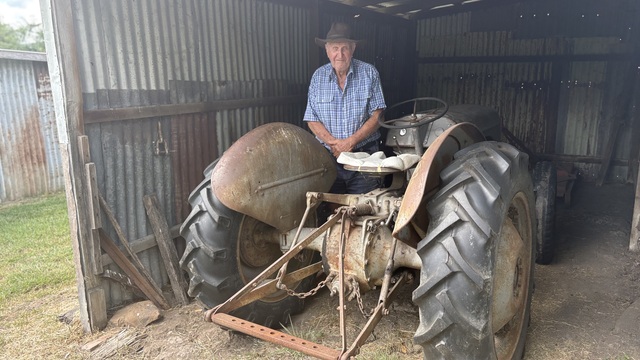
Where paddocks still carry the memory of hoofprints and hard years, Neville Bulow sits on the cusp of 90, his life unfolding not as a single story, but as a long, steady rhythm of work, resilience and small, hard-earned joys.
At his table, a fresh packet of monte carlos sit, waiting to be shared.
“I was born in Matron Stubb’s hospital in John st, on the 25th of March 1936,” he begins.
His earliest days were shaped by circumstance; his mother fell ill after his birth, and another new mother-Mrs Else, stepped in to care for him. When his mother was discharged from the hospital, they came home to their 60 acre farm.
From childhood, the farm defined everything. School at Mount Marrow offered moments of light, particularly from a teacher-Miss Burton, who inspired him.
“She was a very nice person, and was very fond of pomegranates. I knew that there was a tree up along our boundary line, and I used to go up and pick a nice one and take it to school and give it to her.”
“She was very grateful for that, so she let me go home a half an hour early in the afternoon.”
“That didn’t work out real well either. As soon as I got home, my dad said to me, ‘seeing as you’ve come home early, you can get the hoe and chop some scotch thistles before milking.”
“I wanted to be a school teacher,” he says.
“My dad simply said that I’m not going to send you to college… and then pay for somebody else to work on the farm.”
So he worked on the farm. From 14 to 17. “All I got was three feeds a day and a bed.”
“When I turned 17, dad was doing real well on the farm, and he gave me a 5 pound note..I thought I was a millionaire!” he said.
“Every month after, dad received the cream check from Jacaranda milk at Booval, and gave me some money from that.”
Music found Neville.
“My cousin Ainsley Bulow and I decided we’d like to play a musical instrument.”
Neville went down to East Ipswich to purchase his first piano accordion.
He and his cousin then found a music teacher at Lowood and travelled every Tuesday night to learn to play.
A piano accordion led to a travelling dance band, winding through country halls and muddy roads.
“We travelled all over the countryside like the Leyland brothers..from Kalbar to Mulgowie, and everywhere in between.”
It was in those halls he met the woman who would become his wife, Phyllis Degen.
“On the 20th of February 1960, we got married in the central congregational Church in East Street (Ipswich), and our minister was Reverend Graham Hall.”
Following a honeymoon in Burleigh Heads, they stayed with Neville’s parents while they’re new home was getting built on a 70 acre farm.
Children, drought and work followed in quick succession. There were years working on the railway, long shifts at the milk factory, and always the farm in between. Cattle, pigs, corn, oats. Life was not linear but layered, each responsibility stacking upon the last.
Neville retired at 60.
The greatest tests came later. Illness arrived quietly, then all at once.
One morning, Neville woke up feeling awful. He’d been lacking energy, losing weight and having issues.
“I said to my wife..there’s something seriously wrong with my body.”
Following tests, a diagnosis followed. “You’ve got cancer of the bowel.”
The words, he says, “hit me like a freight train.”
Surgery, treatment and time carried him through.
“You’re one of the lucky ones,” his doctor told him.
Neville repeats that line not as triumph, but as fact. Survival, like so much else in his life, came down to persistence.
Neville started a chemo program, and was later given the all clear.
“What I would like to say to all the people reading, is if you think there’s something wrong with your body, do something about it, because it could save your life.” he said.
Despite the loss of his wife, and later his youngest son to an aggressive brain tumor in 2024, Neville still keeps putting one foot in front of the other.
He still works on his farm, still reads, still tends what he can.
“I made a vow when I retired, that I wasn’t going to go home and sit on my backside and do nothing,” he said.
“I’m going to try and do something positive every single day.”
Then, with the weight of nine decades distilled into a single line, he adds his motto as the following:
“Keep your mind and body active, and live one day at a time.”