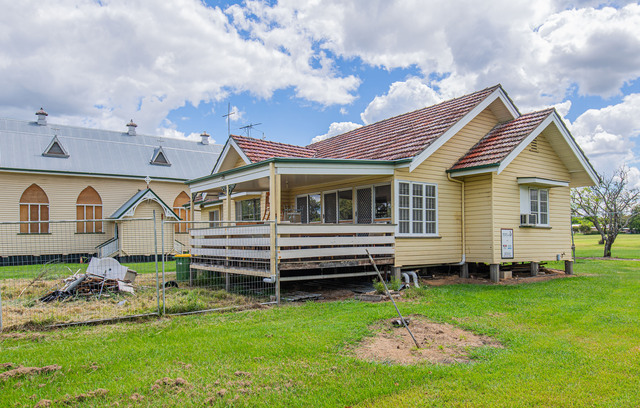
The relocation of St Brigid’s presbytery building is understood to be happening this week, weather permitting.
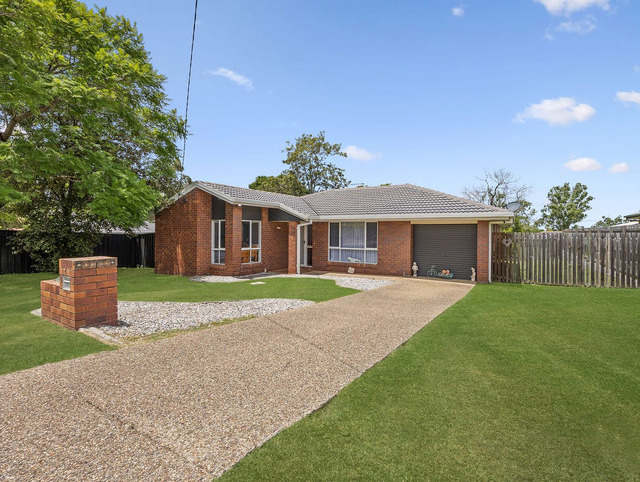
We’re told the former home for the local Catholic priest will be cut in half by engineers before removal.
The two ‘modules’ will then be transported north to a new site within the church grounds at 26 Matthew Street, where the building will be rejoined.
The small garage building standing beside the presbytery is also to be moved to 26 Matthew Street.
The move signals the first major on-site work to relocate the Queensland Heritage Listed, St Brigid’s Catholic Church, which is one of the largest timber Catholic church buildings in the Southern Hemisphere.
Heritage and Ipswich City Council planning approvals were granted to the Brisbane Catholic Archdiocese in late 2023 to move the church 20 metres to the east on what will soon be the former site of the presbytery.
Approval was also granted to move the Parish Hall from its current site next door to the Rosewood Police Station in Railway Street to where the church now stands.
And on March 9, this year, council approved building work permits for the relocation and restoration of the church and the relocation of the parish hall.
The catalyst for the juxtaposition of buildings in the church grounds was the closure of the church in July 2020, on structural engineering advice due to soil movement and the lean on one side of the building reaching as much as 200mm.
At the time, the building had been braced internally for 10 years.
The reason for the closure was explained in the application to council in 2022: “The overarching problem is the reactive soils of the church site which has caused settlement and movement of the stumps over time, probably for many years.
“The large size, height and construction methods of the church have exacerbated this issue to some degree.
“The major concern is the horizontal displacement of the internal columns which has caused the supporting bearers to twist, with risks of eventual instability and structural failure. “Bolted connections have generally failed and are ineffective.”
Several in-situ solutions had been discussed and considered.