From the communes of the Happy Families to the soaring flights of one of the world’s largest eagles, we offer you a quick sketch on some more of our local birds.
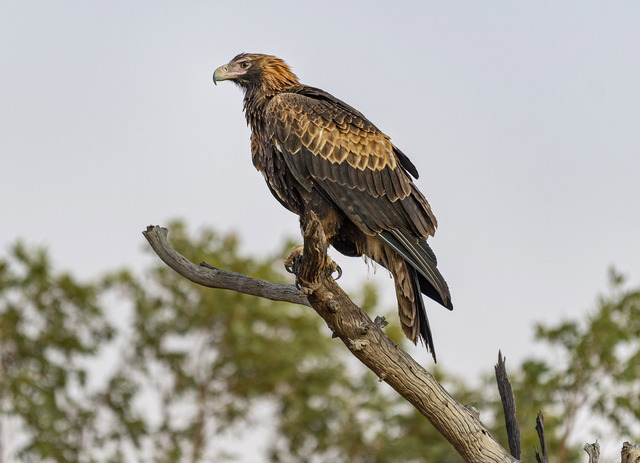
WEDGE-TAILED EAGLE
The wedge tail, as it is commonly known, is one of the biggest eagles in the world and Australia’s largest bird of prey – a boast that can easily be believed when it’s seen with wings fully extended. Their nests are easy to spot wedged high in the forks of trees and built from sticks. According to Bush Heritage Australia, a nest can weigh as much as 400kg. Wedge tails mate for life, share in the building of the nests and caring for their young and are aggressively territorial of their hunting grounds.
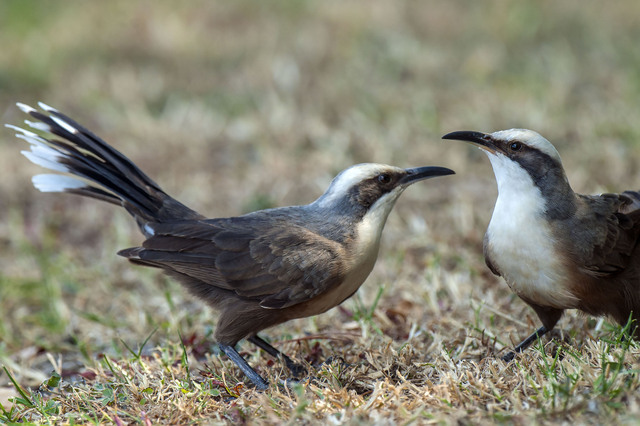
GREY CROWNED BABBLER
Once seen, hard to forget, these birds gather on the ground to forage, and give the appearance of playing and babbling ‘happy family’ groups. The combination of the white stripes on its head and neck, the curved bill and white tipped tail is distinctive. According to ‘Birds in Backyards’, they live and breed in co-operative territorial groups of two to fifteen birds (usually four to twelve). In the spirit of a good commune, while the group may contain only one or two breeding females, everyone helps in nest building, keeps the brooding females fed while incubating the eggs and helps with parenting.
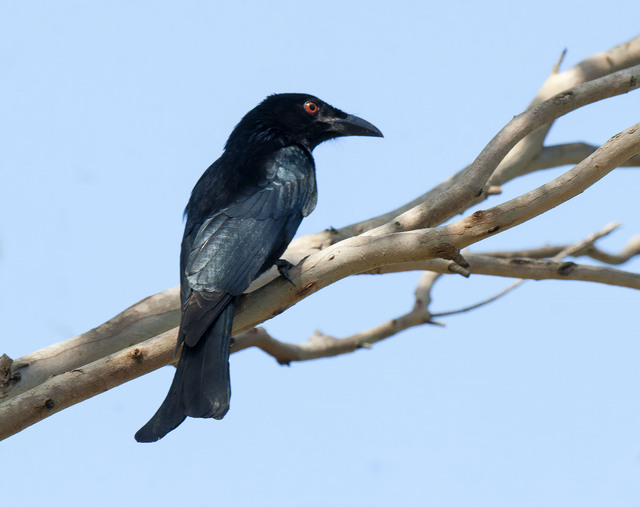
SPANGLED DRONGO
This the only drongo found in Australia (there are a lot of openings for jokes in that statement). It has glossy black feathers with iridescent blue green spots (spangles), a long, forked tail and red eyes. White spotting can also be seen on their upper wings. Found in forests and parks on their migratory flight south in late spring and north in early autumn, they feed on insects caught in flight in fascinating aerobatic displays. Nests are built of twigs, vines and grasses held in place by spider webs.
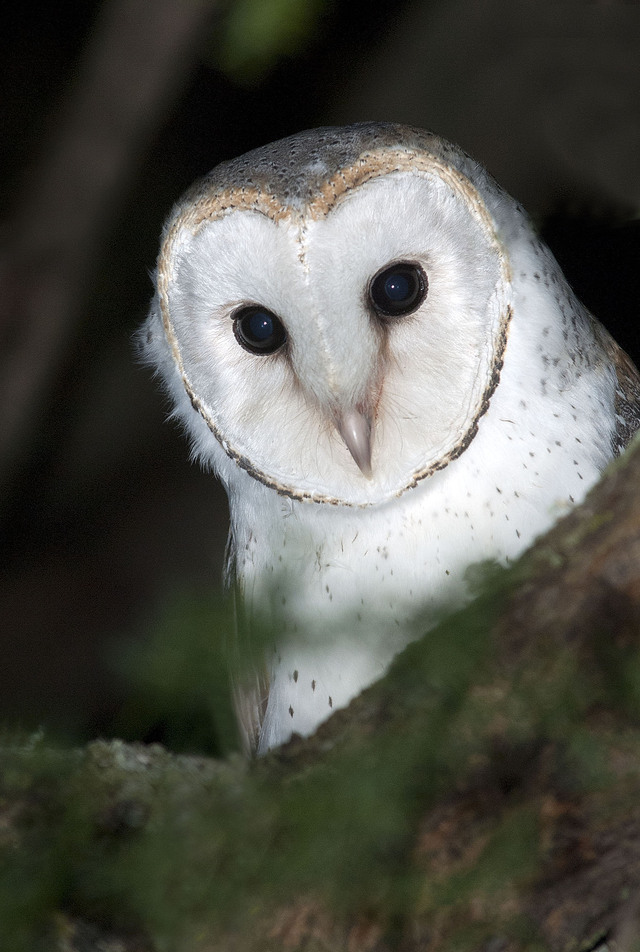
BARN OWL
Like its peers the barn owl is active at night, but if you are lucky enough to see one in or on its roost during the day, they are easily identified by their heart shaped facial disk. They feed on small mammals and birds. Mice on the menu are a particular favourite, which is a good reason to check whether the mouse bait you are using isn’t harmful to birds. The barn owl hunt in flight and find their prey by sound, not sight. According to the Australian Museum, the slightest sound waves are channelled toward the ears, allowing the owl to pinpoint prey even in complete darkness.
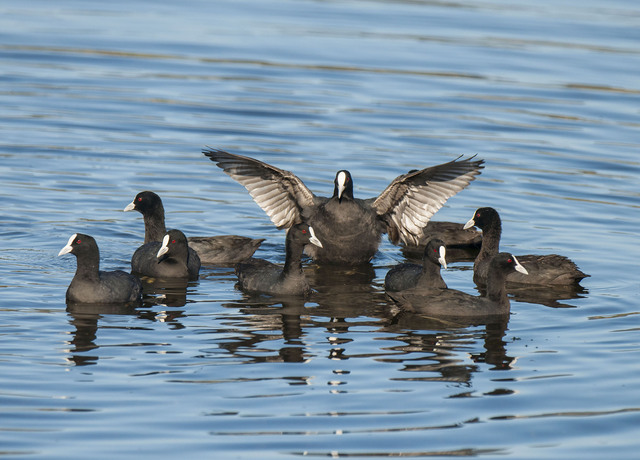
EURASIAN COOT
Coot seems a rather derogatory common name, but it comes from the old Dutch word for waterfowl. Coots are a stocky looking bird with dark grey feathers and a white beak and forehead shield. They feed on water plants and are most commonly sighted in swamps, dams and lagoons, where they dive underwater to feed on vegetation. They too are aggressively territorial during breeding season and are known to purloin duck or grebe nests, vacant or occupied, to use as their own. Both sexes share parental duties and breed only when conditions are favourable.