As the Reserve Bank of Australia keeps the cash rate on hold at 3.6 percent for December, economists remain divided as to whether the next move will be a cut or a rise.
Emily Stewart of ABC News said economists were divided on higher interest rates or higher inflation.
Asia Pacific economist Callam Pickering at Indeed believes if inflation persists, they may have to hike rates at the next board meeting in February.
The RBA may have no choice but to hike rates, he said. A failure to do so would ultimately undermine their credibility as an inflation targeting central bank.
“High inflation is incredibly damaging to an economy, impacting every business and household, but the burden falls primarily on lower income households and small businesses.
“Higher interest rates won’t be welcomed – they never are – but at least the burden of higher rates primarily falls on middle and higher income earners.’’
The ABC’s Michael Janda said the Bank’s monetary policy board played about as much of a straight bat as it could on the outlook for interest rates.
In a statement, the RBA board said it was appropriate to remain cautious on rates.
“The recent data suggest the risks to inflation have tilted to the upside, but it will take a little longer to assess the persistence of inflationary pressures,“ the post-meeting statement notes.
“Private demand is recovering. Labour market conditions still appear a little tight but further modest easing is expected.
“The board therefore judged that it was appropriate to remain cautious, updating its view of the outlook as the data evolve.
“The board will be attentive to the data and the evolving assessment of the outlook and risks to guide its decisions.“
As Janda simplifies it: “There’s a chance inflation is getting a bit out of hand, but we’ll want to wait until at least the December quarter inflation data comes out in late January to be more certain.
A rate hike in February is a possibility, but it doesn’t feel like the RBA board is itching to press the trigger.
It all depends on the economic data between now and then.
ABC’s Stephanie Chalmers asked at the press conference if the RBA cut rates too many times in 2025.
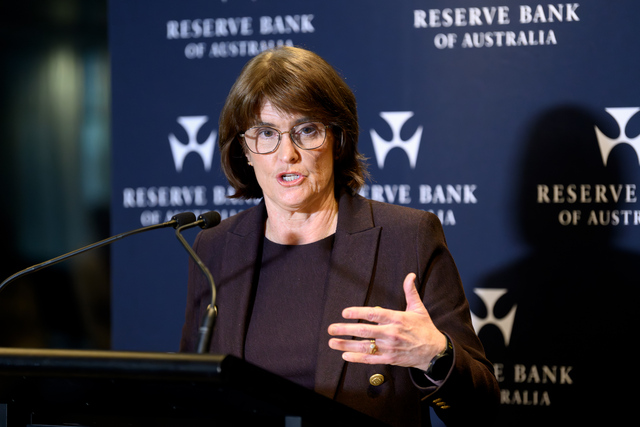
“You could read it that way,” RBA governor Michele Bullock said, “but a lot has changed.
“You go back six or seven months and a lot of people were saying we needed to drop interest rates quite a lot because things were very, very soft.
“The board has been cautious, I think that has been borne out.“
Federal Treasurer Jim Chalmers said while millions of Australians would have preferred more rate relief, this decision was widely anticipated by economists and markets.
Growth in house prices could flatten as a result of the rates hold, according to Cotality’s research director Tim Lawless.
He told ABC’s Emily Stewart an extended period of stable interest rates against a backdrop of rising home values was likely to temper home purchasing demand.
“Households on the median income have already seen their lift to borrowing capacity eroded by higher home values.
“Any hawkish shift in the RBA’s tone toward the outlook for interest rates would weigh on confidence and dampen transaction activity.“
Mr Lawless said the most activity would probably remain in the lower end of the market.
With rates on hold for the foreseeable future, lower end home values are likely to remain the stronger segment of the market, as mainstream demand is deflected towards the lower price points amid affordability and serviceability constraints.
“Competition among first home buyers and investors is already seeing values rise faster across the lower price points of the market.’’
Banks, insurance companies and miners are tipped to be among key winners on the Australian Stock Exchange if the Reserve Bank raises official interest rates next year, according to the Sydney Morning Herald’s Clancy Yeates and Millie Muroi.
This is a scenario money markets have priced in after higher-than-expected inflation figures.
Experts said that any such increase in interest rates could help to widen banks’ profit margins, while insurance companies also tend to make higher returns from their investment portfolios when interest rates rise.
Miners could also be viewed more favourably in an environment of rising rates, while adding that real estate stocks and infrastructure were more likely to struggle.
Meanwhile, companies that tend to rely on more borrowing, such as those in infrastructure and real estate investment trusts, will probably feel the squeeze as interest rates rise or stay higher,
Michael McCarthy, a market strategist at online share trading platform Moomoo, said
Financial markets have priced in one RBA rate rise over 2026 after the monthly consumer price index showed inflation rose to 3.8 percent in the year to October, up from 3.6 percent in September.
The RBA targets inflation of two to three percent, and various bank economists have recently changed their forecasts, no longer predicting cuts from the RBA.