WHEN Robert Kington was young his ambition was to be a farmer.
He said he loved the idea of tending to paddocks, riding on tractors and getting knee deep in everything working the land entails.
Robert is now 33 and a single dad who lives in a house in Rosewood and works as a trade assistant. He owns his house but the garden is not large enough for paddocks or even a tractor. The dream it seemed, was out of reach and not achievable.
Then one day he had an idea that involved the fish tanks in his home and the waste the fish produce. A work colleague had been using hydroponics to grow produce and this further inspired the budding small-time farmer.
He watched Youtube videos and studied up. Perhaps he could be a farmer after all, albeit on a much smaller scale?
The project began as a hobby and he started with a chop and flip system, which is small and easy to set up.
“I always wanted to try this method of growing plants, so I started experimenting with my set up two years ago and it has now developed into what it is today,” he said.
“Most of my ideas came from watching documentaries and talking to people who have been successful with their own setups.”
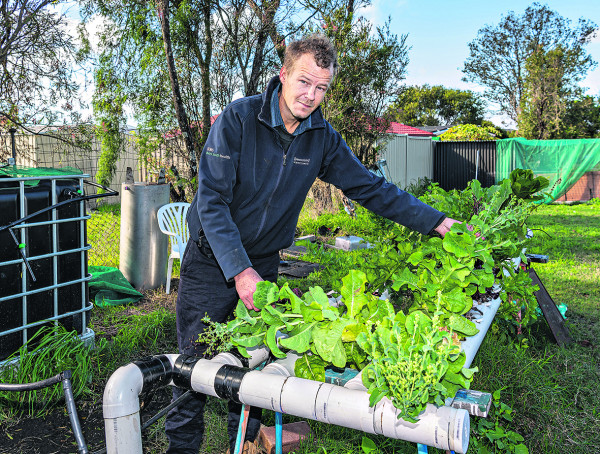
The chop and flip system required one water tank container, a few plastic fittings and a small water pump to move water from the bottom where the fish were, back up to the grow beds.
“The fish in my tanks are Jade Perch and the seedlings that I grow are lettuce, spinach, celery, herbs and tomatoes,” he said.
“Once those took I slowly added capsicums, peppers and chillies.”
The produce grew well, surprising him because despite the study and meticulously laid plans – he was still a novice when it came to growing for consumption.
It is not only about the enjoyment in setting up the system but it is the satisfaction when the produce is ready for the plate that gives him the encouragement to keep growing.
“I was amazed with the results, so I added the pipe system and then kept on expanding from there,” he said.
“This is a really easy option and much more cost effective than regular gardening.
“The water starts from the fish tanks, then it flows to the grow beds, the ammonia from the fish converts from nitrite and then to nitrate because of the gravel in the grow beds.
“The surface area from the gravel attracts the naturally occurring bacteria to do this.
“Sometimes I add organic grade fertilisers, such a Seasol or a seaweed fertiliser which contains micronutrients, just to add that extra boost, and also because sometimes you may experience nutrient deficiencies.
“The fish benefit from this process as the water is always clean and free from ammonia, and once the fish are a suitable size you can enjoy fresh fish on your plate to accompany your fresh produce.”
He said success came when the set-up was established with fish at the right number to provide nutrients.
“Basically, it is the fish waste which keeps everything in control and healthy,” he said.
“It is the perfect fertiliser that is readily available through aquaponics.
“I recommend this method of ‘paddock to plate’ to anyone, and I really enjoy sharing my experiences and also my produce with others.
“With the rising cost of fresh produce this is a great way to grow your own and if you want to be sustainable, this is the way to go.”
Mr Kington stills works as a trades assistant but is hopeful one day he could swap that hat for the broad brimmed one worn by farmers.