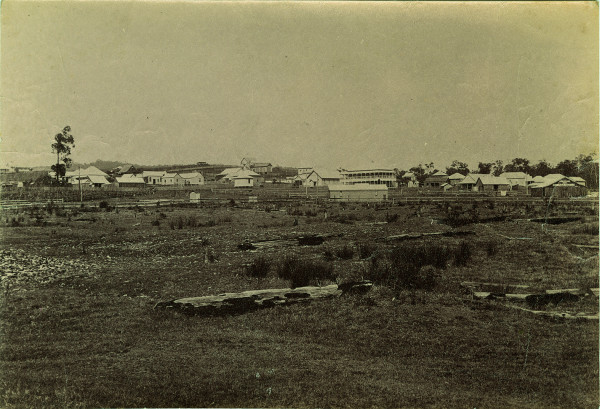
This week we offer the second in a series about the early settlement of the district, which is drawn from the writings of an unnamed journalist in 1926 – a history drawn from his talks with the remaining sons of pioneers.
OUR writer credits the development of the Rosewood and Marburg districts with the construction of the rail line – first through to Grandchester (originally known as Bigge’s Camp) and then on to Toowoomba – and later the establishment of the timber mills and the sugar mill by Charles Smith and his son, TL Smith.
And he gives a word picture drawn from those conversations of the very, very early days of settlement.
To one standing above any of the rich valleys of the district, on a hill side overlooking an almost English scene of small farms and hamlets, the stories of the few surviving pioneers seem almost incredible.
The old folk tell of the laborious days and nights of the clearing day, the difficulty of making a way through the scrub to their selections, and life in their first farm homes, merely slab and bark humpies.
They recall the wanton destruction of millions of feet of beautiful timber, of piling the logs in heaps and burning them.
They scratched the first seed into the ground; with the rude implements which were all they could afford, and spent many weary nights in watching, keeping the wallabies off the growing crops.
These grand old men tell, too, of fighting against more cruel forces than the scrub, wallabies, bushfires or droughts.
The forces left to fight were the ‘market forces’. So little was paid per pound of maize or butter – non-survival prices if it had not been for the amazing yield per acre.
Though prices were low, the seasons generally were good, and the marvellously fertile land aided them in their fighting.
Big yields from the maize crops and an abundance of milk from the cows gave the pioneers their ultimate success.
Long days, weary nights, no farm equipment, large families and poor living conditions – it is a wonder they persevered, yet for many, an alternative was not possible – a return to the poverty and lack of freedom of their home country.
Houses with boarded floors and glass windows gradually sup-planted the humpies, and the scrub was all destroyed and the wallabies went.
The settlers needed provisions, clothing, farm implements, and harness.
Here and there throughout the district, stores were started to serve them.
On the main roads where the timber teams travelled, inns were opened, and did a brisk trade.
Stores sprang up beside them, and hotels beside the stores in other places.
The first railway of the state, from Ipswich to Grandchester (then Bigge’s Camp), was almost all in the Rosewood district – townships, including Rosewood, were started here and there along the line.
The line was soon extended to Toowoomba, and in the other direction to Brisbane, with each extension exercising a greater influence on the development of [the] Rosewood [Scrub district].